Trump rejects Iran blame for Minnesota cyberattack, points finger at ‘corrupt’ political foe
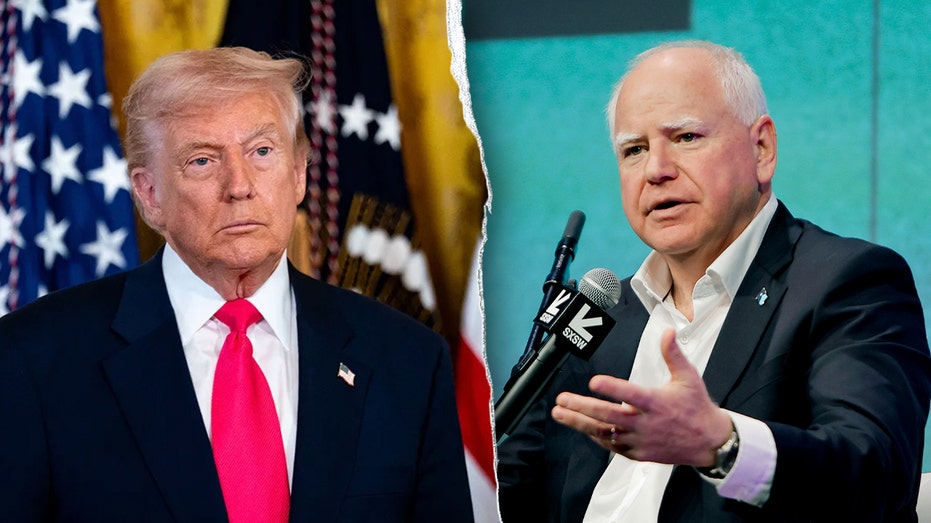
President Donald Trump dismissed speculation that Iran was behind a cyberattack targeting dozens of water systems in Minnesota, blaming instead the state’s “corrupt governor,” Tim Walz, and the state he runs.
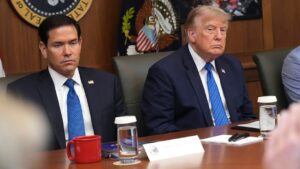
“I just want to mention that we heard in Minnesota there was a cyberattack, and they blame it on Iran,” he said at the start of a Cabinet meeting Friday at Camp David, Maryland.
“I don’t think so. I think I blame it on Minnesota because they’re grossly incompetent,” Trump said. “There was a cyberattack of 30 water plants, and I would blame it on Minnesota and the governor, the corrupt governor of Minnesota. They like to say, oh, is Iran? Iran should be so lucky. Iran’s got bigger problems than worrying about Minnesota.”
Trump’s dismissal puts him at odds with a preliminary assessment reportedly shared by U.S. and state officials and comes days after federal agencies warned that Iranian-affiliated hackers were targeting the same kinds of systems. Iranian involvement and poor cybersecurity are not mutually exclusive: previous Iranian-linked attacks on U.S. water facilities exploited internet-connected equipment protected by default or nonexistent passwords.
TRUMP ADMINISTRATION PROBES MINNESOTA OVER ‘TRANSGENDER DOLLS’ IN SCHOOLS, BUT STATE DISPUTES STORY
Trump has repeatedly attacked 2024 vice presidential candidate Walz over widespread fraud in Minnesota’s state-administered social services programs.
Walz, the 2024 Democratic vice presidential nominee, abandoned his bid for a third term in January amid mounting scrutiny of his administration’s handling of the schemes. Walz has not been accused of participating in the fraud.
Minnesota IT Services said the “coordinated cyberattack targeted operational technology at more than 30 Minnesota community water systems” Sunday and Monday, but the Minnesota Department of Health is “not aware of any active requests from Minnesota cities to have their residents modify their drinking water usage.”
U.S. and state officials and others familiar with the incident told The New York Times that Iranian hackers were likely behind the cyberattack.
Minnesota IT Services said it has not determined yet whether a “specific actor” was responsible for the attack and the probe remains active.
The attacks disrupted automated operations in several communities.
Malicious software temporarily shut down controls for the well and water treatment plant in Braham, while Plymouth and South St. Paul shifted some operations to manual control. Officials reported no known threat to drinking water.
Federal agencies warned just days before the Minnesota attacks that Iranian-affiliated hackers were targeting the computerized controls used by water systems, power facilities and local governments. The agencies said the campaign had already disrupted operations at some facilities and caused financial losses. Investigators assessed that the hackers were seeking to cause disruption inside the U.S.
Iran has targeted American water infrastructure before.
In 2023, hackers affiliated with Iran’s Islamic Revolutionary Guard Corps breached programmable controllers at several U.S. water and wastewater facilities, according to the Cybersecurity and Infrastructure Security Agency.
The hackers generally exploited equipment that was exposed to the internet and still used default or nonexistent passwords. The affected utilities moved some operations offline, and no drinking water was compromised.
In an earlier case, the Justice Department charged an Iranian hacker with repeatedly accessing the control system of a small dam in Rye, New York, in 2013. Prosecutors said the intrusion would have allowed him to operate the dam’s sluice gate remotely, but the gate had been manually disconnected for maintenance at the time.
Fox News Digital reached out to Walz’s office for comment.
Fox News’ Gregory Norman-Diamond contributed to this report.
Latest Political News on Fox News