Who controls the Strait of Hormuz right now? Here’s what the ship traffic actually shows
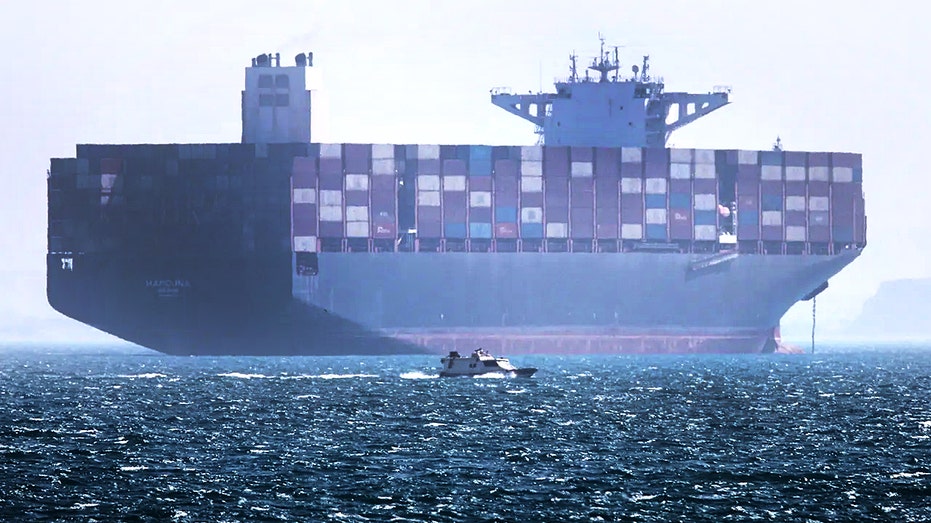
As tensions between the U.S. and Iran remain unsettled more than five months since the start of the war, the number of ships transiting the Strait of Hormuz appears to be far below pre-conflict levels.
“Despite a brief recovery in late June, vessel traffic through the Strait of Hormuz remains significantly reduced, AIS [Automatic Identification System] transit information suggests operators increasingly favouring the Northern route following projectile attacks, ongoing security concerns, and heightened enforcement activity,” a United Kingdom Maritime Trade Operations (UKMTO) voluntary reporting area overview noted.
“Traffic remains well below normal levels, with AIS-detected transits approximately 90% below pre-conflict baselines and declining since the 24-26 (June) peak.”
The trade intelligence company Kpler reported in part of a post Friday on X that “Maritime traffic through the Strait of Hormuz picked up on 13 August, with 13 confirmed crossings, a 44% day on day increase from nine. Of these, nine vessels used the Iranian Unilateral Scheme, none were confirmed on the Hormuz TSS and four routes remained undetermined.”
TANKERS ATTACKED AS TEHRAN, TRUMP BATTLE OVER CONTROL OF STRAIT OF HORMUZ
International Chamber of Shipping Marine Director John Stawpert told Fox News Digital Friday that while “traffic is significantly lower” compared to before the war started, “it’s not completely stopped.”
“Essentially, what we see is a cyclical process,” Stawpert said. He explained that when a ceasefire is announced, there is an “uptick” in vessels entering and exiting the Persian Gulf, but “as those ceasefires break down … you’ll see that drop off again.”
He also noted there is still a mine threat in the waters, which affects how much traffic can enter and exit the Persian Gulf.
Stawpert indicated that, to resolve the issue, there would need to be “a meaningful ceasefire that everybody has faith in,” an end to the Iranian threat, an end of the U.S. blockade against Iran and a grasp on which waters are “safely navigable” in the face of the threat posed by mines.
President Donald Trump has claimed the U.S. has full control over the waterway.
“The U.S.A. has total control over the Strait of Hormuz. I THINK WE WILL KEEP IT! Our Naval Blockade is being called, by everyone, ‘A WALL OF STEEL,’ and there is nothing Iran can do about it,” Trump wrote in a Wednesday Truth Social post.
“They have no Navy, they have no Air Force, their remaining soldiers are unpaid, the IRGC is decimated and fleeing, and their ‘Leadership’ is uncertain, at best! They have No Money — Their country is “shot.” All they have is FAKE NEWS and 300% INFLATION, and getting worse! Iran is all talk and no action, the Bully of the Middle East No Longer. Praise be to Allah!” he added.
But the Islamic Republic of Iran’s Persian Gulf Strait Authority said in a post Wednesday on X, “Claims and repeated posts by U.S. officials that the Strait of Hormuz is no longer blocked do not change the reality: the Strait of Hormuz remains blocked and will not be reopened until Iran’s conditions are accepted.”
Iranian Foreign Minister Seyed Abbas Araghchi posted on X Thursday claiming “the U.S. has long miscalculated due to intelligence failures. Case in point: The war on Iran. Now, an even bigger miscalculation on the Strait of Hormuz. Worse than fake news is fake intelligence. Be careful. Allah is Great, Greater than ANY power on Earth. In Allah we trust.”
IRAN SAYS US MISCALCULATED OVER STRAIT OF HORMUZ DESPITE TRUMP’S CLAIM OF ‘TOTAL CONTROL’
The recently appointed leader of the Iranian Basij paramilitary unit said Thursday that the passage is “under Iran’s control and management,” Reuters reported.
“There’s a northern route which is essentially Iranian controlled. There’s a southern route through Omani waters which is overseen by the U.S. Navy,” Stawpert explained to Fox News Digital, noting that control over the passage is “divided.”
U.S. Energy Secretary Chris Wright has touted the flow of oil out of the strait.
“Thanks to the coordinated efforts of the U.S. military and our gulf allies, the seven-day average for oil leaving the Strait of Hormuz is currently up to almost 9 million barrels per day,” Wright wrote in a post on X Tuesday.
“When combined with the additional 5-7 million barrels per day leaving the region via newly upgraded pipelines and export facilities, total oil flows are currently averaging approximately 15 million barrels per day. On Sunday alone, over 20 million barrels left the Arabian gulf region, which is above the pre-conflict average.”
“In coordination with the U.S. military, the U.S. Department of Energy maintains the best available data related to oil and oil products leaving the Arabian gulf. Many private businesses undercount the number of ships leaving the Strait of Hormuz due to ships moving covertly through the waterway,” Wright added in another post.
“We need to bear in mind that there’s human beings on board these ships,” Stawpert told Fox News Digital, asserting that the “risk” they face is “unacceptable.”
IRAN DEFIES TRUMP, DECLARES STRAIT OF HORMUZ BLOCKED AFTER PRESIDENT CLAIMS US HAS ‘TOTAL CONTROL’
“And that’s why this needs to end,” he continued, “for those humanitarian reasons, more than anything.”
The White House did not immediately respond to Fox News Digital’s request for comment.
Latest Political News on Fox News